
Introduction
Water pumps are widely used in irrigation systems, industrial plants, municipal water supply projects, and commercial buildings. Choosing the right Variable Frequency Drive (VFD) for a water pump is essential for achieving energy savings, stable pressure control, and longer equipment life.
However, many users select a VFD based only on motor power and overlook important factors such as voltage, control methods, environmental conditions, and protection functions. This guide explains how to choose the right VFD for your water pump application and avoid common mistakes.
Why Use a VFD for Water Pumps?
A Variable Frequency Drive controls the speed of an electric motor by adjusting the output frequency and voltage. For water pump systems, a VFD offers several advantages:
Energy Savings
Traditional pumps operate at full speed regardless of demand. A VFD adjusts motor speed according to actual water requirements, significantly reducing energy consumption.
Soft Start and Soft Stop
Direct motor starting can cause high inrush current and mechanical stress. A VFD provides smooth acceleration and deceleration, protecting both the motor and pump.
Stable Water Pressure
With built-in PID control, a VFD can maintain constant pressure in water supply systems.
Reduced Water Hammer
Gradual speed changes help eliminate water hammer effects, reducing pipeline damage.
Extended Equipment Life
Lower mechanical stress results in longer service life for pumps, motors, and piping systems.
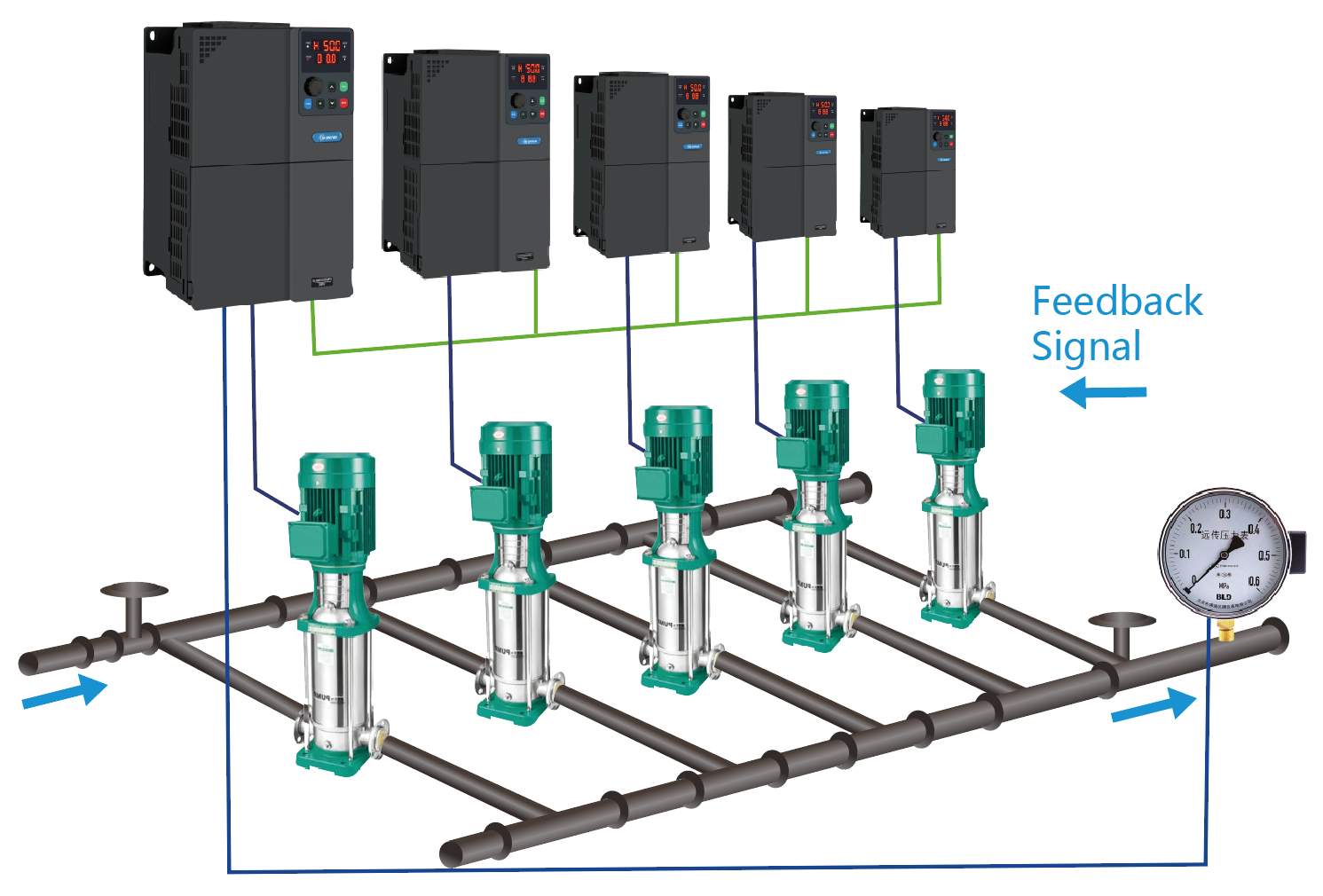
Step 1: Determine Motor Power
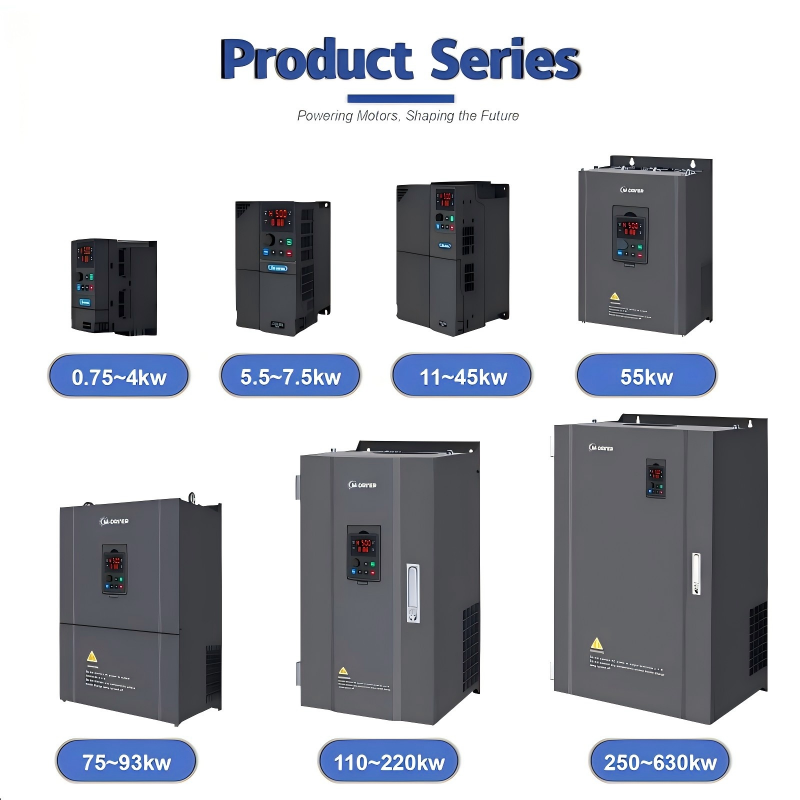
The first step is to identify the rated power of the pump motor.
Common motor ratings include:
0.75 kW
1.5 kW
2.2 kW
4 kW
7.5 kW
15 kW
22 kW
As a general rule, the VFD should have the same or higher power rating than the motor.
For example:
| Motor Power | Recommended VFD |
|---|---|
| 0.75 kW | 0.75 kW VFD |
| 1.5 kW | 1.5 kW VFD |
| 2.2 kW | 2.2 kW VFD |
| 7.5 kW | 7.5 kW VFD |
For heavy-duty applications or pumps with high starting torque requirements, selecting one size larger may be beneficial.
Step 2: Check the Input Voltage
Matching the power supply voltage is critical.
Single-Phase 220V
Suitable for small pumps used in residential or agricultural applications.
Three-Phase 220V
Common in light industrial environments.
Three-Phase 380V
The most common voltage for industrial pumping systems.
Always verify:
Input voltage
Output voltage
Motor nameplate information
Using an incorrect voltage can damage both the motor and the VFD.
Step 3: Select the Appropriate Control Method
V/F Control
V/F (Voltage/Frequency) control is suitable for most standard water pumping applications.
Benefits include:
Lower cost
Easy setup
Reliable operation
Recommended for:
Irrigation pumps
Transfer pumps
General water supply systems
Vector Control
Vector control provides higher precision and better low-speed performance.
Recommended for:
Constant pressure systems
Industrial process pumps
Applications requiring accurate flow control
Step 4: Consider the Pump Application
Different applications require different VFD functions.
Irrigation Systems
For agricultural irrigation systems, important features include:
Energy saving operation
Automatic pressure control
Outdoor installation capability
Booster Pump Systems
Booster systems often require:
PID control
Constant pressure regulation
Sleep and wake-up functions
Industrial Water Supply
Industrial applications typically require:
Stable operation
Communication functions
High reliability
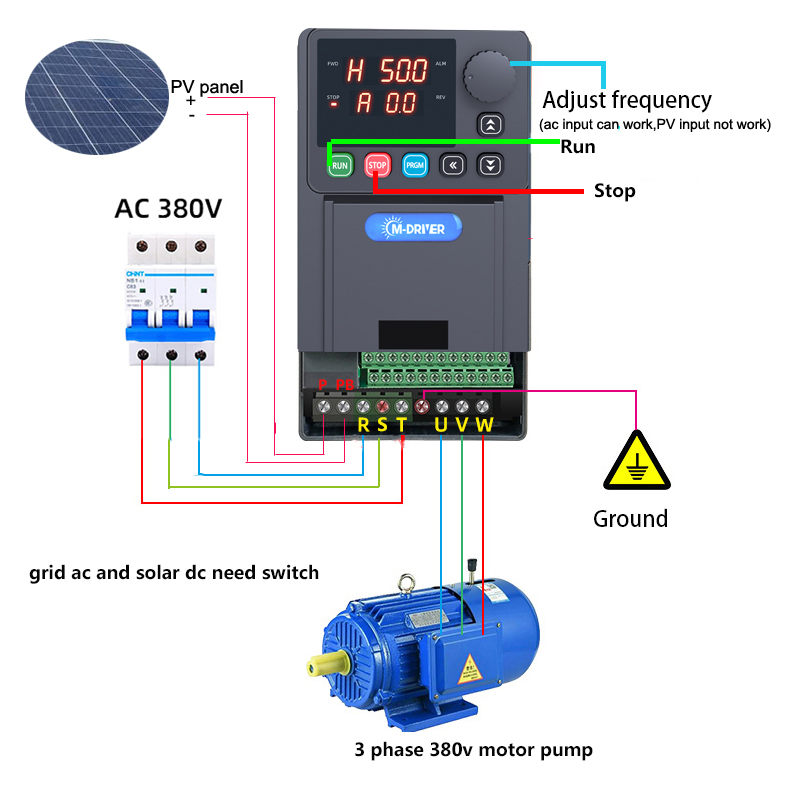
Solar Water Pump Systems
For solar pumping projects, standard VFDs are not sufficient.
A Solar Pump Inverter with MPPT technology should be selected to maximize solar energy utilization and ensure efficient pump operation.
Step 5: Evaluate Protection Functions
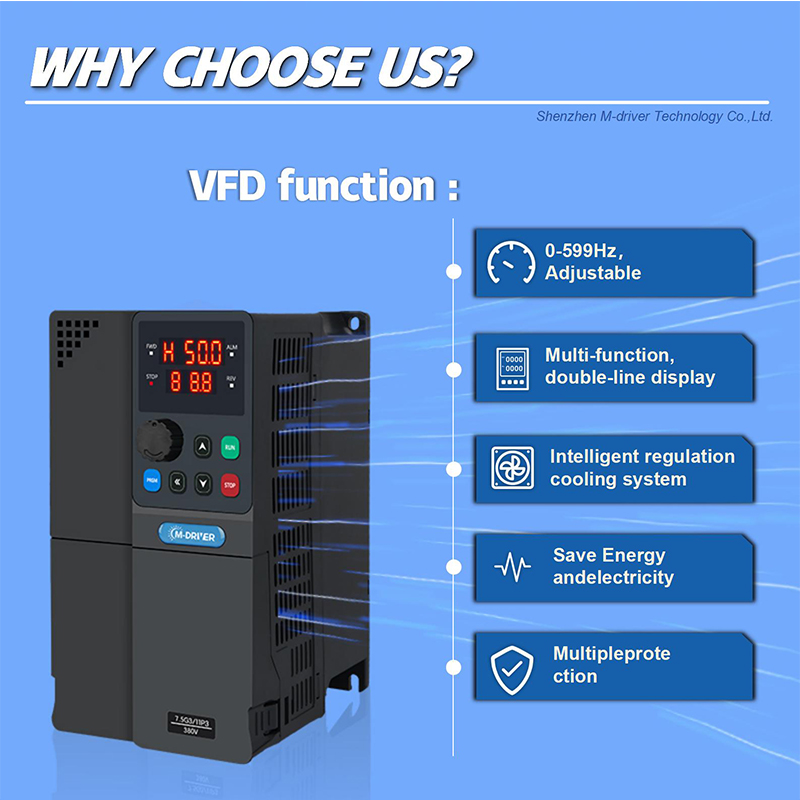
A quality VFD should provide comprehensive protection features.
Important functions include:
Overcurrent Protection
Protects the motor and drive from excessive current.
Overvoltage Protection
Prevents damage caused by unstable power supply conditions.
Undervoltage Protection
Ensures safe operation during voltage fluctuations.
Overtemperature Protection
Protects electronic components from overheating.
Dry Run Protection
Especially important for water pump systems where water supply may become insufficient.
Motor Overload Protection
Prevents motor damage during prolonged overload conditions.
Step 6: Check Environmental Conditions
Installation environment plays an important role when selecting a VFD.
Consider:
Temperature
High ambient temperatures may require derating or additional cooling.
Humidity
Humid environments require proper protection against moisture.
Dust
Dusty environments may require higher enclosure protection ratings.
Installation Location
Indoor and outdoor installations often require different protection levels.
For harsh environments, IP54 or IP66-rated VFDs may be recommended.
Common Mistakes When Choosing a Water Pump VFD
Choosing a VFD Based Only on Power
Motor current is often more important than power rating.
Ignoring Voltage Requirements
Voltage mismatch can cause immediate system failure.
Selecting the Cheapest Option
Low-quality VFDs often lead to higher maintenance costs and downtime.
Forgetting Future Expansion
Selecting a slightly larger VFD may support future system upgrades.
Ignoring Protection Functions
Lack of protection features can significantly reduce equipment lifespan.
Recommended VFD Solutions
Small Water Pumps
Power Range:
0.75 kW – 2.2 kW
Suitable for:
Residential water supply
Small irrigation systems
Garden pumps
Medium Industrial Pumps
Power Range:
3.7 kW – 22 kW
Suitable for:
Commercial buildings
Industrial water systems
Booster stations
Large Industrial Pumps
Power Range:
30 kW and above
Suitable for:
Municipal water projects
Industrial process systems
Large pumping stations
Solar Water Pumps
Recommended Solution:
Solar Pump Inverter with MPPT technology
Suitable for:
Agricultural irrigation
Remote areas
Solar-powered pumping systems
Frequently Asked Questions
What size VFD do I need for a water pump?
The VFD should generally match the motor power rating and motor current requirements.
Can a VFD save electricity on water pumps?
Yes. Energy savings of 20% to 60% are commonly achieved depending on the application.
Can one VFD control multiple pumps?
Yes, but proper system design and control logic are required.
What is the best control mode for water pumps?
V/F control is suitable for most applications, while vector control provides better precision and pressure stability.
Can a solar pump use a standard VFD?
No. Solar pumping systems should use a dedicated solar pump inverter with MPPT functionality.
Conclusion
Choosing the right VFD for a water pump involves more than simply matching motor power. Factors such as voltage, control method, application requirements, environmental conditions, and protection functions all play important roles.
A properly selected VFD can improve energy efficiency, stabilize water pressure, reduce maintenance costs, and extend equipment life.
Whether you need a solution for irrigation, industrial pumping, booster systems, or solar water pumps, selecting a reliable VFD manufacturer is essential for long-term performance and system reliability.For more information, please contact us!