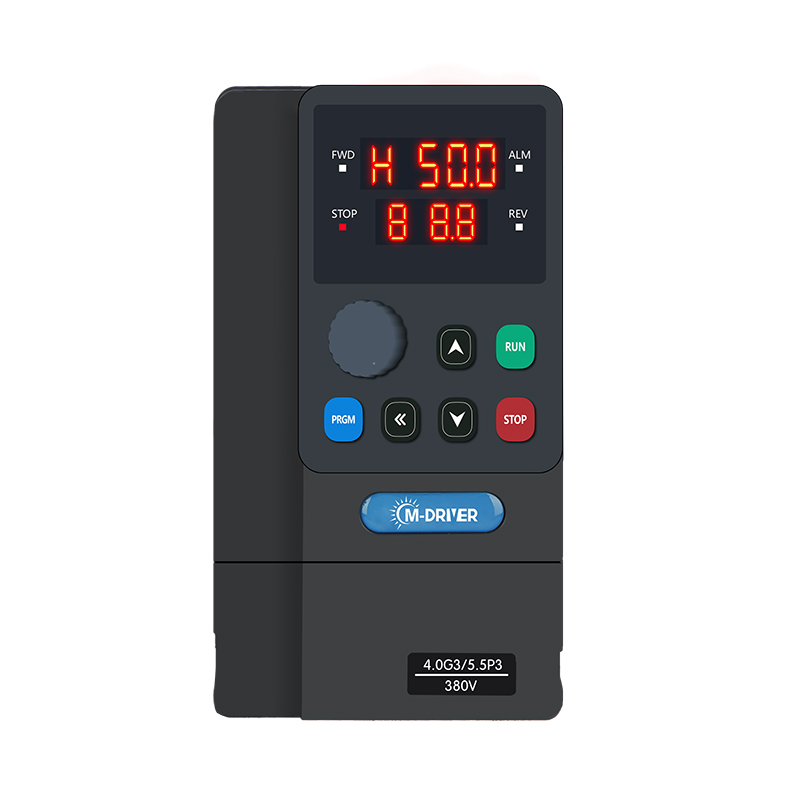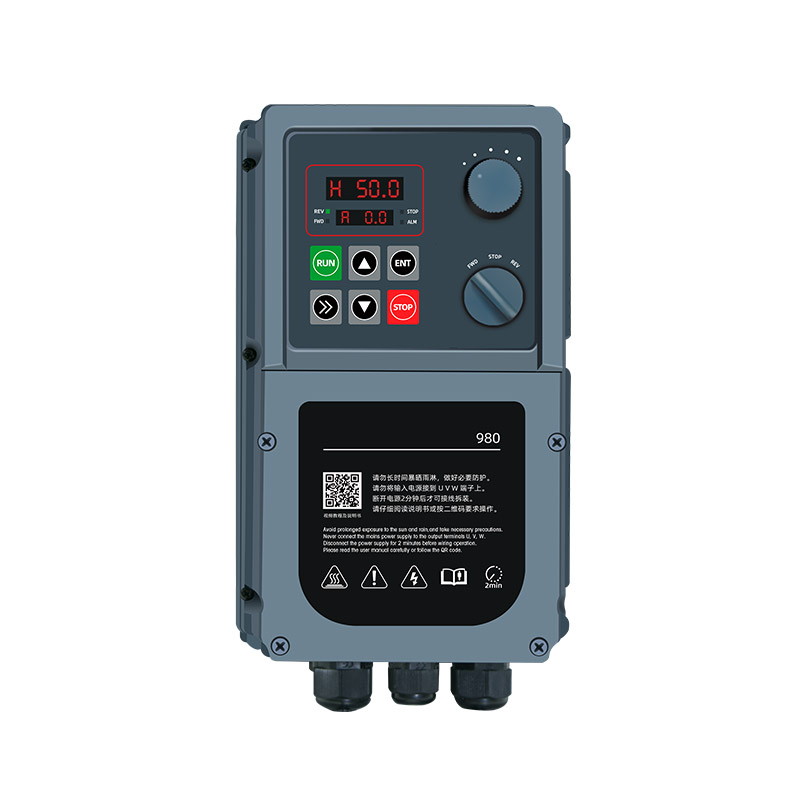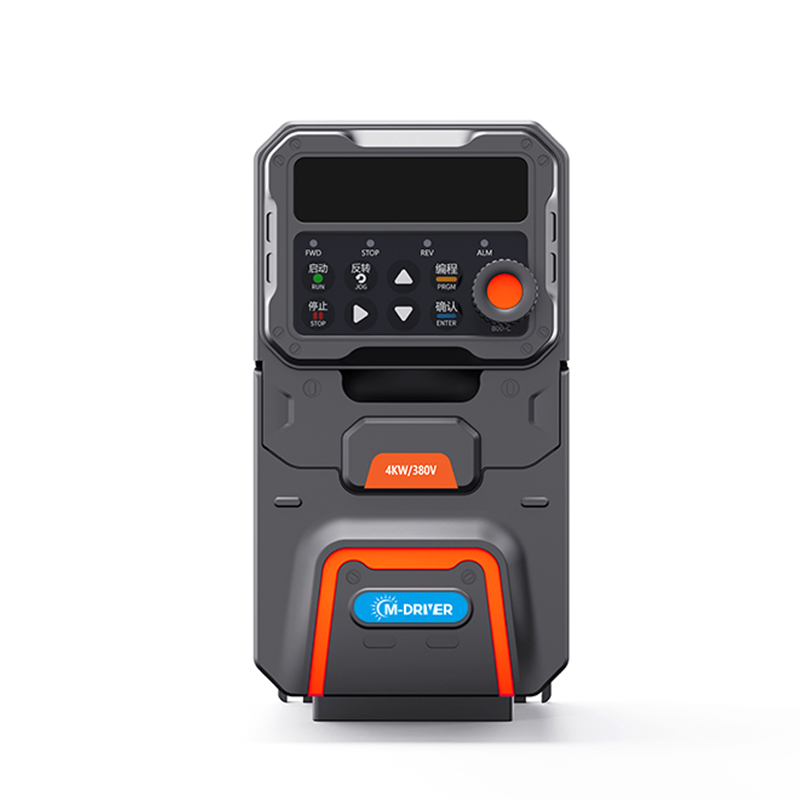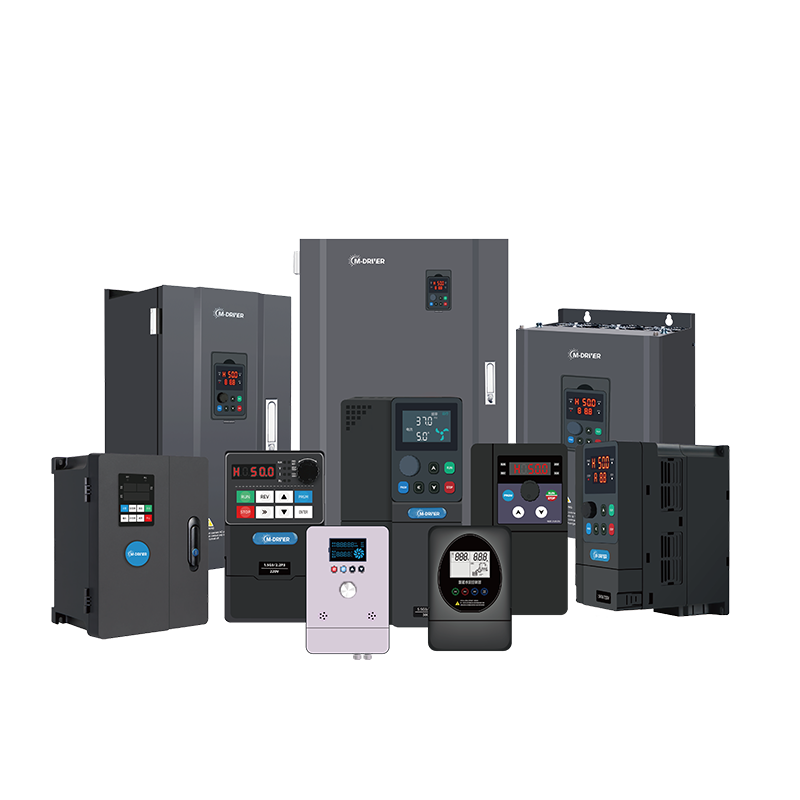

VFD stands for Variable Frequency Drive. A VFD is an electronic motor controller that controls the speed and torque of an AC motor by adjusting the frequency and voltage supplied to the motor. VFDs are commonly used in pumps, fans, HVAC systems, conveyors and industrial machinery where variable-speed motor control is required.
In simple terms, a VFD allows an AC motor to run at the speed actually required by the application instead of operating at full speed all the time.
VFD Meaning and Full Form
VFD stands for Variable Frequency Drive.
The term refers to an electronic drive used to control the speed and torque of an AC motor by varying the electrical frequency and voltage supplied to the motor.
VFDs may also be referred to as AC drives, adjustable frequency drives, variable speed drives (VSDs), or inverter drives, although terminology can vary between industries and regions.
How Does a VFD Work?
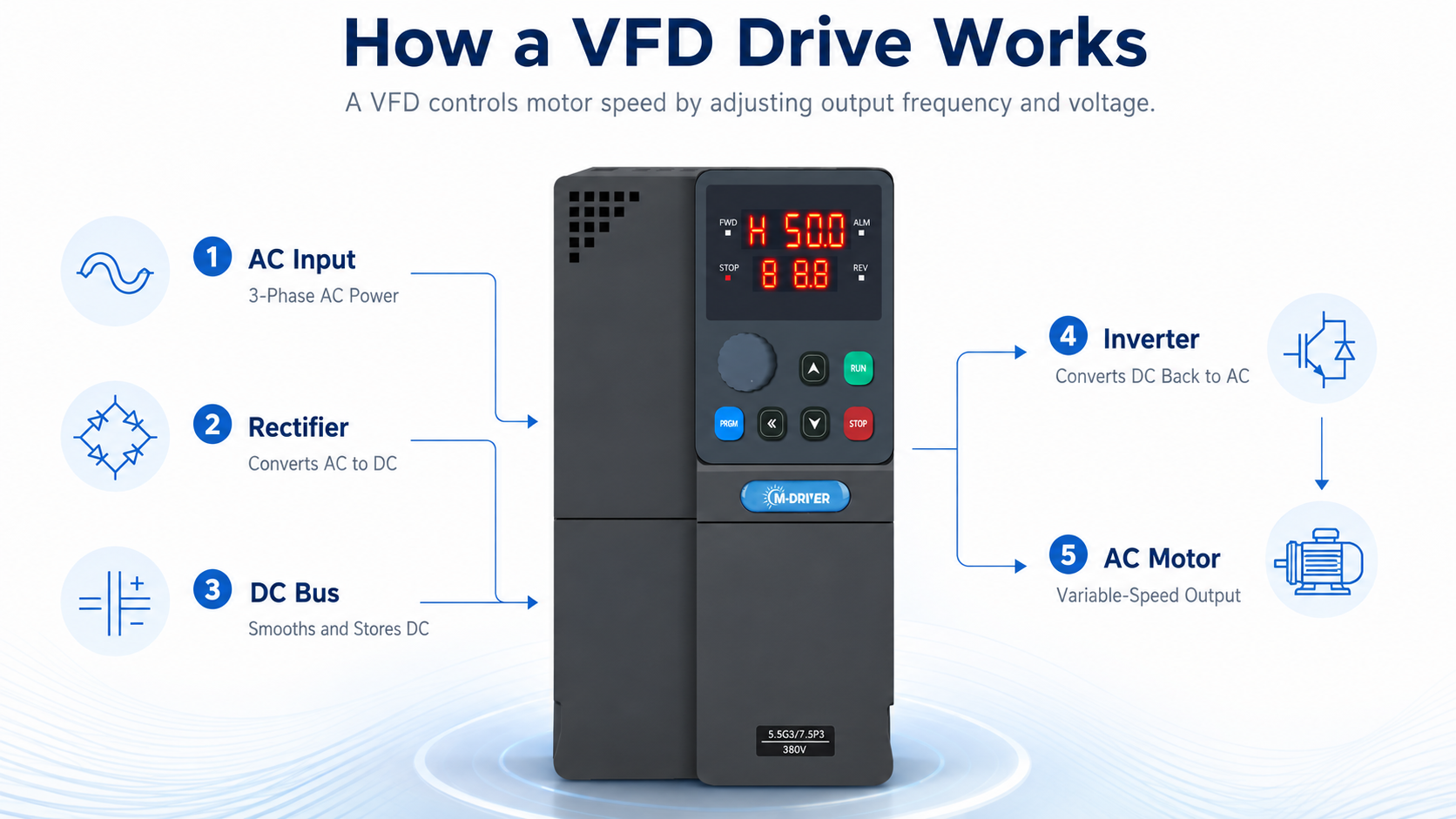
A VFD controls the power supplied to an AC motor through three main stages:
1. Rectifier
The rectifier converts the incoming AC power into DC power.
2. DC Bus
The DC bus smooths and stabilizes the converted DC voltage before it reaches the inverter stage.
3. Inverter
The inverter converts the DC power back into AC power with adjustable frequency and voltage.
By controlling the output frequency and voltage, the VFD can regulate the motor's operating speed and torque according to the requirements of the application.
What Does a VFD Do?
A VFD controls the speed and torque of an AC motor by adjusting the frequency and voltage supplied to the motor. This allows the motor to operate according to actual process demand rather than running at full speed continuously.
It also provides smooth acceleration and deceleration, reducing mechanical stress and current spikes during motor start-up and shutdown. This can help extend motor and equipment life while improving overall system efficiency.
In practical applications, VFDs are commonly used to:
- Control motor speed and torque
- Provide smooth start and stop
- Reduce energy consumption
- Improve process control
- Reduce mechanical wear
- Support pumps, fans, HVAC systems and industrial machinery
Benefits of Using a VFD
Using a VFD can provide several advantages when the drive is correctly selected and applied.
Improved Energy Efficiency
Pumps and fans often do not need to operate at full speed continuously.
A VFD allows motor speed to follow actual system demand instead of relying only on mechanical control methods such as valves or dampers.
This can reduce unnecessary energy consumption in suitable operating conditions.
Reduced Mechanical Stress
Direct motor starting can create sudden mechanical impact on the motor and connected equipment.
A VFD provides controlled acceleration and deceleration, helping reduce stress on motors, couplings, belts, pipelines, and other mechanical components.
Better Process Control
Adjustable motor speed allows industrial equipment to respond more accurately to changing production and process requirements.
Lower Mechanical Wear
Reducing unnecessary high-speed operation and sudden starts can help reduce wear on motors and driven equipment.
Flexible Motor Operation
VFD drives allow motor speed to be adjusted for different operating conditions without relying entirely on mechanical speed-control methods.
What Is a VFD in HVAC?
In HVAC systems, a VFD controls the speed of motors used in fans, pumps, cooling towers, air handling units and other motor-driven equipment.
Instead of running the motor continuously at full speed, the VFD adjusts motor speed according to actual airflow, pressure or temperature demand. This allows the HVAC system to respond more efficiently to changing operating conditions while reducing unnecessary motor operation.
For example, a VFD can reduce the speed of a supply fan when full airflow is not required or adjust a pump motor according to system pressure demand.
Where Are VFD Drives Used?
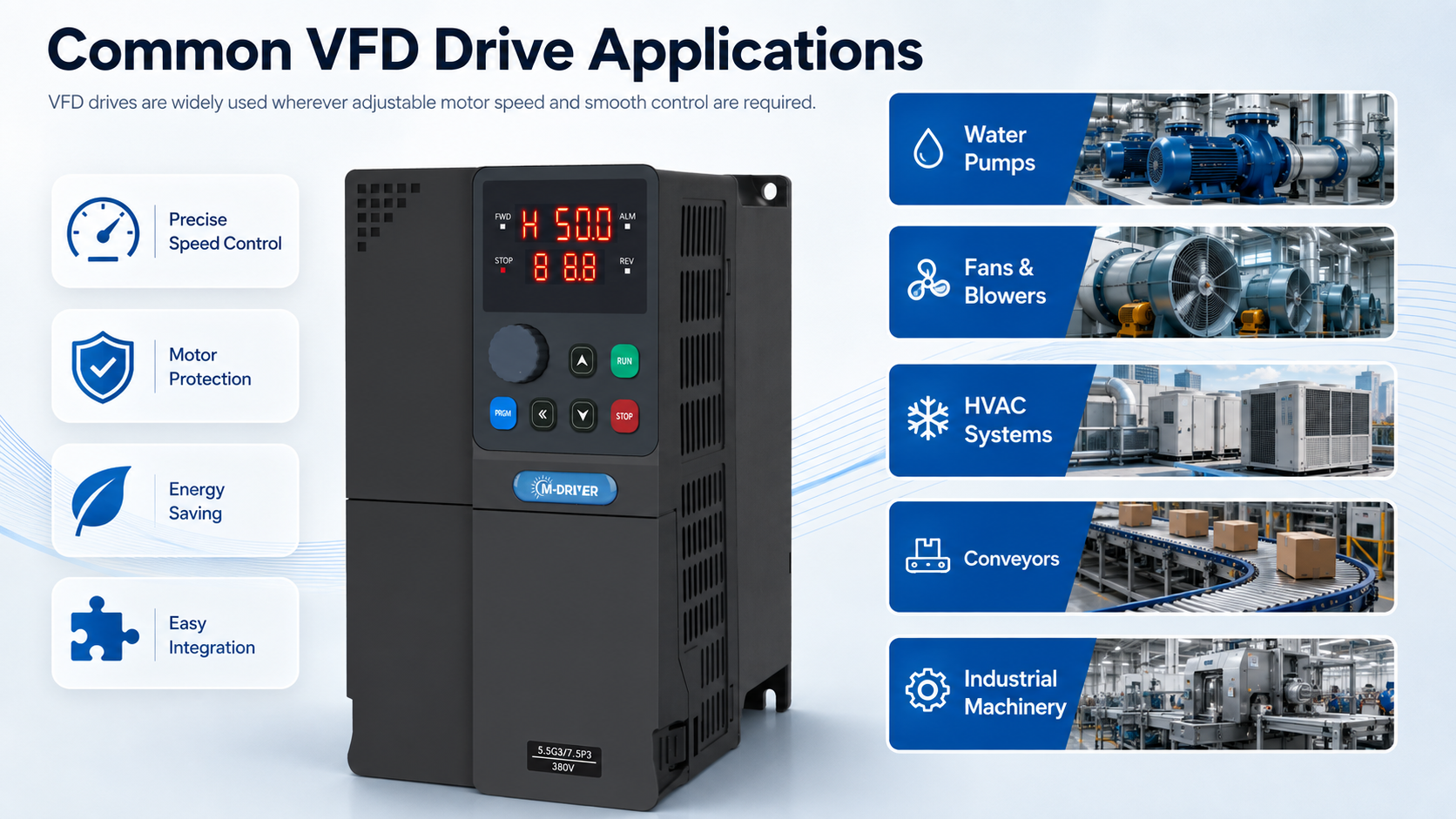
VFD drives are used in a wide range of industrial and commercial motor applications.
Water Pumps
VFDs can adjust pump motor speed according to flow or pressure demand.
They are commonly used in water supply systems, circulation systems, irrigation, industrial pumping, and other applications requiring adjustable pump output.
For pump selection guidance, see How to Choose a VFD for Water Pumps.
Fans and Blowers
VFD drives can control fan and blower speed according to airflow requirements.
Instead of operating continuously at full speed, the motor output can be adjusted according to actual system demand.
HVAC Systems
VFDs are widely used to control fans, pumps, and other motor-driven equipment in heating, ventilation, and air-conditioning systems.
Variable-speed control can help improve system flexibility and operating efficiency.
Conveyors
Conveyor systems often require different operating speeds according to production conditions.
A VFD allows conveyor motor speed, acceleration, and deceleration to be adjusted according to process requirements.
Industrial Machinery
VFD drives are also used in various industrial machines that require adjustable motor speed, controlled acceleration, stable operation, or flexible production control.
How to Choose the Right VFD
Choosing the correct VFD requires more than simply matching the motor power.
Several important factors should be considered:
- Motor rated voltage
- Motor rated current
- Motor power
- Load type
- Required control functions
- Operating environment
- Overload requirements
For example, the requirements of a pump application may be different from those of a conveyor, fan, or heavy-duty industrial machine.
The motor nameplate and actual operating conditions should always be checked before selecting a VFD.
For pump applications, you can also read our VFD Selection Guide for Water Pumps.
VFD Drive vs Soft Starter
A VFD and a soft starter can both reduce the mechanical impact of motor starting, but they are designed for different purposes.
A soft starter mainly controls the motor during startup and stopping.
A VFD can also continuously control motor speed during normal operation by adjusting output frequency and voltage.
If the application only requires reduced starting current and the motor normally operates at a fixed speed, a soft starter may be sufficient.
If adjustable motor speed, process control, or variable-speed operation is required, a VFD is generally the more suitable solution.
Read more: VFD vs Soft Starter: Which One Should You Choose?
Frequently Asked Questions About VFD Drives
What Does VFD Stand For?
VFD stands for Variable Frequency Drive.
It is a device used to control the speed and operation of an AC motor by adjusting the frequency and voltage supplied to the motor.
What Does a VFD Drive Do?
A VFD drive controls motor speed, acceleration, deceleration, and other operating characteristics by changing the electrical frequency and voltage supplied to the motor.
Can a VFD Save Energy?
A VFD can help reduce energy consumption when the motor does not need to operate at full speed continuously.
The actual energy-saving effect depends on the application, load characteristics, operating time, and control method.
Can a VFD Control Motor Speed?
Yes.
Motor speed control is one of the main functions of a VFD. By changing the output frequency, the VFD can adjust the operating speed of a compatible AC motor.
Where Are VFDs Commonly Used?
Common applications include water pumps, fans, blowers, HVAC systems, conveyors, industrial machinery, and other motor-driven systems requiring adjustable speed or controlled acceleration.
Conclusion
A VFD drive provides flexible control of AC motor speed by adjusting the frequency and voltage supplied to the motor.
It can provide smooth starting and stopping, improve process control, reduce mechanical stress, and improve energy efficiency in suitable applications.
Selecting the correct VFD depends on the motor specifications, load characteristics, operating environment, and control requirements.
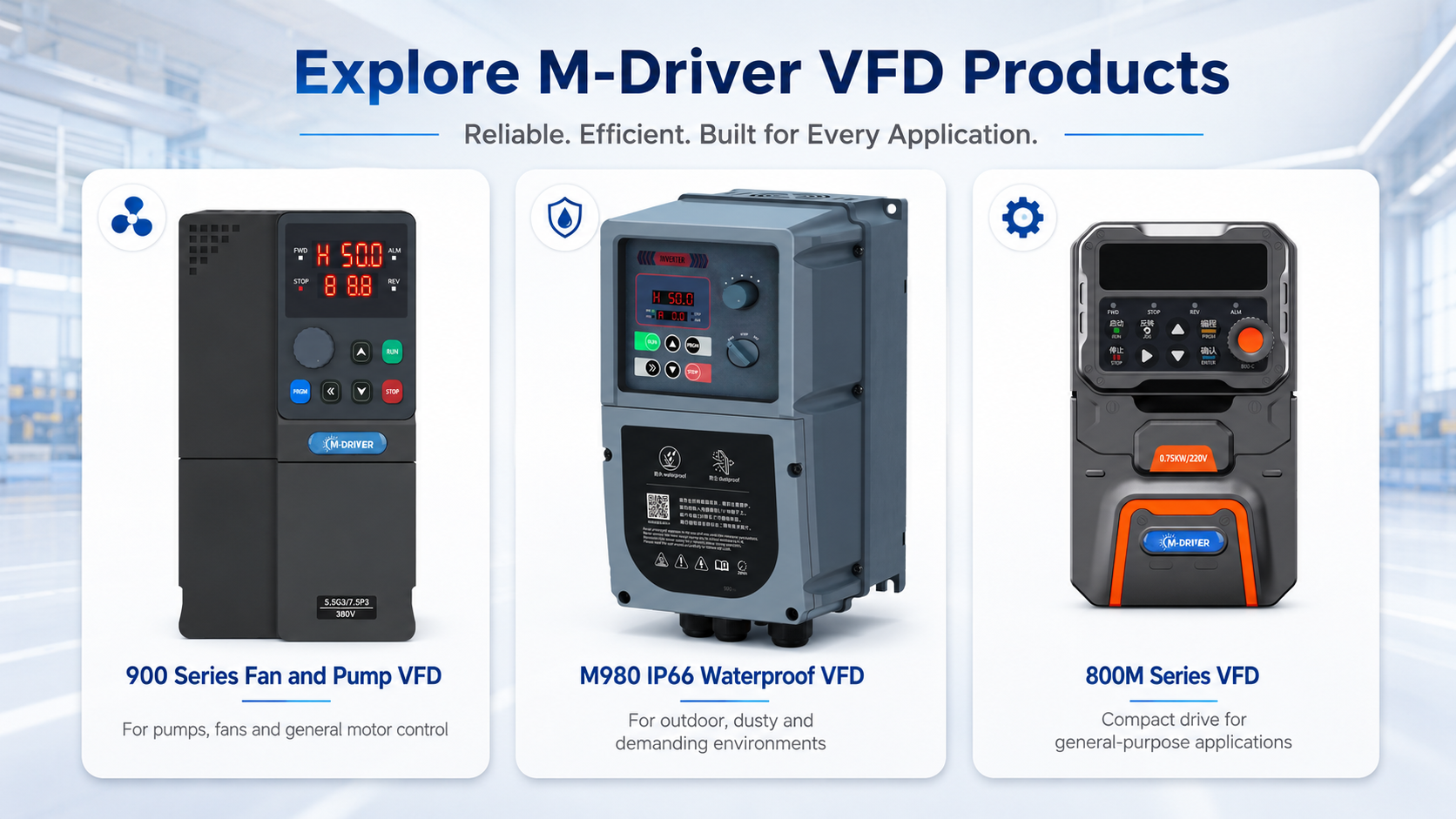
M-Driver provides VFD solutions for pumps, fans, HVAC systems, industrial machinery, and other motor control applications.
Explore M-Driver AC Drives (VFD) to find a suitable drive solution for your application.
Updated: September 2026